
15 Honest Strategies
For a long time, every time I tried to cut monthly expenses, I lasted about eleven days. I’d cancel my subscriptions, swear off takeout, and build a spreadsheet so strict it looked like a punishment. Then something small would happen — a rough week, a birthday, a rainy Tuesday — and I’d cave completely. Not “have one coffee” cave. Full “order everything I’ve been denying myself” cave.
It took me an embarrassingly long time to realize the problem wasn’t my willpower. It was my approach. I was treating cutting expenses like a punishment instead of a skill. And skills, unlike punishments, actually get easier the more you practice them.
Wherever you live, whatever currency you’re counting, the goal here is the same: to cut monthly expenses in a way that still lets you enjoy your life. Not a 30-day extreme challenge. Not a spreadsheet you’ll abandon by February. A set of honest, sustainable habits that quietly free up money month after month.
I’m not writing this from a place of having it all figured out. I still overspend some months. I still get a jolt of anxiety when a bill is bigger than expected. But the difference between me now and me five years ago is that I have a toolkit — fifteen small, repeatable habits that quietly cut monthly expenses without making my day-to-day life feel smaller.
Here are the 15 strategies that actually worked for me, grouped into the order I’d suggest tackling them.
Start With Awareness, Not Restriction
Before you can cut monthly expenses in a way that lasts, you need an honest picture of where your money actually goes. These first two steps are about awareness, not sacrifice.

The 50/30/20 rule gave me a starting framework instead of a rigid rulebook.
1. I started tracking every single dollar (for one month only)
I didn’t budget first. I tracked first. For thirty days, I wrote down everything — the coffee, the app purchase, the “just this once” delivery order. No judgment, no cutting, just watching.
What I found surprised me: it wasn’t the big purchases draining my account. It was a dozen small, forgettable ones. If you want a simple structure for this step, the Consumer Financial Protection Bureau has a free, no-signup budgeting guide that walks through exactly how to log income and spending side by side.
2. I built a budget I could actually stick to
Once I knew where my money went, I picked a framework instead of inventing one from scratch. I landed on a version of the classic 50/30/20 split — needs, wants, savings and debt — because it’s flexible enough to bend around a real life. I go into a lot more depth on adjusting the percentages for your own situation in my 50/30/20 budget guide, and NerdWallet’s guide to budgeting is a solid outside resource if you want a second opinion.
The key shift for me: a budget isn’t a cage. It’s a plan you’re allowed to renegotiate with yourself every month.
Trim the Sneaky Recurring Costs First
Recurring charges are the easiest place to cut monthly expenses because they ask nothing of your daily habits — just five minutes of attention.

A twenty-minute subscription audit was the fastest win on this entire list.
3. I audited every subscription I forgot I had
This is the fastest way to cut monthly expenses on this whole list, and I mean that literally — it took me twenty minutes. I pulled up three months of bank statements and highlighted every recurring charge. I found a meditation app I hadn’t opened in eight months and a cloud storage plan duplicating one I already had through work.
Cancelling both didn’t change my life at all. It just quietly gave me back money every single month.
4. I stopped auto-renewing anything without a calendar reminder
Now, before I sign up for a free trial or annual plan, I set a reminder for three days before it renews. That single habit has saved me from more “oops, I forgot to cancel” charges than I can count.
Rethink the Big, Fixed Expenses
If you want to cut monthly expenses in a way that actually moves the needle, the biggest, most fixed bills deserve a second look before the small ones.
5. I called my providers and just… asked for a better rate
This one felt awkward the first time. I called my internet provider, said I was considering switching, and asked if there was a loyalty discount available. There was. It took eleven minutes and lowered my bill for the next year.
I do this now once a year with insurance, phone, and internet. Not every call works, but enough of them do that it’s become a habit I actually enjoy. I’ve started keeping a note on my phone with the date of each call and what was offered, so the next time I dial in, I already know what to ask for. It turns a nerve-wracking phone call into a five-minute script.
6. I got serious about housing, without necessarily moving
Housing is usually the biggest line item in anyone’s budget, so even a small change here matters more than a dozen small ones elsewhere. Depending on your situation, this could mean refinancing, negotiating a rent renewal, taking on a roommate for a season, or simply asking your landlord about a discount for signing a longer lease.
I want to be honest here: this is the strategy I was most reluctant to try, because it felt like admitting my living situation wasn’t “figured out.” But asking a question doesn’t commit you to anything. The worst outcome is a landlord or lender says no, and you’re exactly where you started.
7. I lowered my energy use without lowering my comfort
Heating and cooling quietly eats a huge share of most utility bills, which makes it one of the simplest ways to cut monthly expenses. I set my thermostat two degrees closer to the outside temperature than felt “perfect,” and used a basic programmable schedule so it adjusted automatically while I slept or was out. The U.S. Department of Energy’s guide to programmable thermostats explains the mechanics well if you want to understand exactly why this works.
Make Everyday Spending Feel Good, Not Restrictive
This is where most people try to cut monthly expenses and quit within a week, because it’s the category most tangled up with comfort, mood, and habit. Small, specific swaps work far better here than blanket bans.

One small, satisfying swap saved roughly $1,460 a year — without a single sacrifice that felt like one.
8. I made one small, satisfying swap instead of banning a whole category
I didn’t quit coffee. I quit buying it from a shop every single day. Brewing at home most mornings and treating a café visit as an actual treat — not a default — saved a meaningful amount every month, and honestly, I enjoy my occasional coffee shop visit more now than I used to.
9. I started shopping with a list, every time, no exceptions
This sounds almost too simple to matter, but it’s a reliable way to cut monthly expenses on groceries specifically. Impulse buys live in the gaps of an unplanned trip. A list closes those gaps. I also started shopping on a full stomach rather than a hungry one, which sounds like a small thing until you notice how differently a grocery store looks when you’re not hungry while walking through it.
10. I planned meals around what I already had
Once a week, I look at what’s already in my fridge and pantry before I plan anything new. It’s turned “I have no idea what to make” into a game rather than a chore, and it means less food quietly rotting in the back of the fridge. On weeks when I’m busy, I’ll cook one large batch of something simple on a Sunday and portion it out, which also keeps me from reaching for takeout on the nights I’m too tired to think about dinner.
11. I made my own versions of a few expensive habits
Not everything — I’m not making my own toothpaste. But a homemade cleaning spray, a bigger batch of coffee brewed at home, a lunch packed instead of bought — these small substitutions add up because they happen so often. If groceries are tight some months, it’s also worth knowing what support exists; the U.S. government’s SNAP eligibility page is a good starting point if you’re in the U.S., and most countries have an equivalent food assistance program worth researching.
Build Habits That Protect Your Progress
The final stretch isn’t about finding more ways to cut monthly expenses — it’s about protecting the progress you’ve already made so it doesn’t quietly slip away.
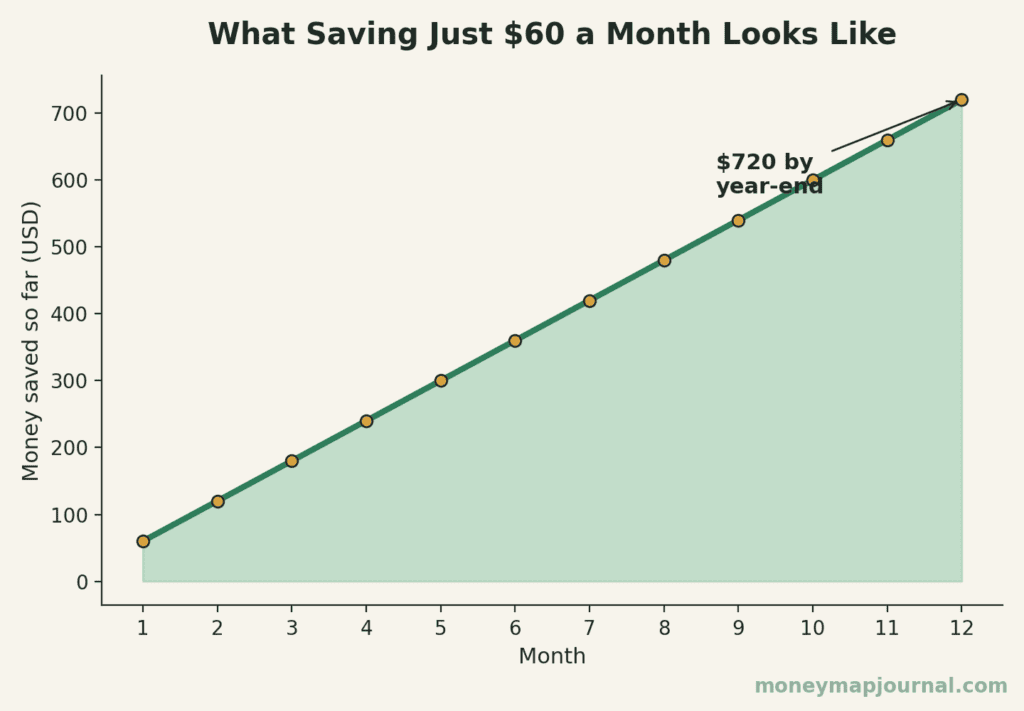
Small, automated savings compound faster than they feel like they should.
12. I automated my savings so I never had to decide twice
I set up an automatic transfer the same day my income arrives, before I can “accidentally” spend it. Whatever is left is what I actually have to work with. This one habit did more for my savings rate than any amount of willpower ever did. If you’re starting from zero, my guide to building an emergency fund walks through how much to save first and where to keep it.
13. I tackled debt with a method, not just good intentions
If you’re carrying debt, the interest can quietly cancel out every other effort you make to cut monthly expenses. I compared the debt snowball (smallest balance first, for momentum) against the debt avalanche (highest interest first, for math) in my snowball vs. avalanche comparison and picked the one that matched my personality, not just my spreadsheet.
14. I gave myself a genuinely guilt-free spending category
This might be the most important strategy for anyone trying to cut monthly expenses without burning out. I keep a small, fixed amount every month that I can spend on absolutely anything, no explanation needed. Because that money is planned for, spending it doesn’t feel like failure. It’s the difference between a budget that feels like a diet and one that feels like a plan.
15. I looked for a little extra income instead of only cutting
Trying to cut monthly expenses has a floor — you can only trim so much before you’re cutting things you genuinely need. Adding even a small amount of extra income doesn’t. A few hours of freelance work, selling things I no longer used, or a modest side project moved the needle faster than another round of expense-cutting ever could. I’ve collected some realistic starting points in my guide to side income ideas if you want to explore that side of the equation too.
Quick Answers to Questions I Used to Ask Myself
How much should I try to cut from my monthly expenses at first? Start smaller than feels ambitious. Aiming to cut monthly expenses by 5–10% in your first month is realistic and sustainable, and it builds the confidence to go further later. Trying to slash 50% overnight is usually what leads to burnout and a full return to old habits within weeks.
What’s the single fastest way to cut monthly expenses? For most people, it’s the subscription audit in strategy three. It requires no lifestyle change at all, just twenty minutes and a bank statement.
Will trying to cut monthly expenses mean giving up everything I enjoy? No — and if it does, the plan won’t last. The guilt-free spending category in strategy fourteen exists precisely so that trimming costs doesn’t turn into deprivation. A sustainable budget always has room for a few things you genuinely love.
The Real Secret to Cutting Monthly Expenses Without Feeling Deprived
If there’s one thing I’d want you to take from all of this, it’s that the strategies which stick are the ones that don’t feel like punishment. Every time I tried to cut monthly expenses through pure restriction, I burned out within weeks. Every time I made a small, specific, sustainable change instead, it just… stayed. Quietly, in the background, making my life a little easier every single month.
You don’t need to do all fifteen of these at once to cut monthly expenses in a meaningful way. Pick two. Give them a month. Notice how it feels. Then pick two more. That’s really the whole method — small, honest changes, repeated consistently, for long enough that they stop feeling like effort and start feeling like who you are.
Wherever you’re starting from, you’re allowed to build a version of this that fits your life, your currency, and your goals. That’s the whole point.
If you take nothing else from this, take this: the version of you who feels deprived rarely keeps the habit. The version of you who feels like they’re finally in control usually does. Aim for the second one, and let the savings follow.