When my wife walked out of the bathroom and showed me the two pink lines on the pregnancy test, I felt a massive wave of pure joy hit me as an expectant father. But almost immediately, that joy was followed by a sharp pang of financial panic.
The reality of raising a child and becoming a dad is incredibly beautiful, but the financial mechanics behind it can be absolutely terrifying if you are unprepared.
I knew I needed a solid, actionable plan immediately. Building a realistic cost of having a baby budget became my late-night obsession while my wife rested.
I spent hours crunching numbers, reading global averages, and figuring out how to stretch our income to master these new upcoming expenses.
From my roots here in Nairobi, I learned the incredible value of community and resourcefulness. But navigating modern parenthood and providing for a family requires a cold, hard financial strategy.
Whether you are a father reading this from the US, the UK, Australia, or right here in Kenya, you need a financial roadmap to survive the early months.
In this guide, I am going to share everything I learned as a dad about preparing financially for a newborn and mastering your cost of having a baby budget, step by step.
Understanding the Real Cost of Having a Baby Budget as a Dad
The very first step to finding financial peace of mind as a new father is removing the mystery from the math. You cannot plan for an expense if you do not know what it is, which is why your cost of having a baby budget matters.
According to experts at Investopedia, the first year of a baby’s life can cost anywhere from $10,000 to $15,000 globally.
That number is staggering, which is exactly why rigorous financial planning is absolutely critical for new parents.
You cannot just wing it and hope your regular paycheck will magically cover the massive influx of new expenses heading your way.
The Hidden Medical Expenses in Your Cost of Having a Baby Budget
Even with great health insurance, hospital bills can be wildly unpredictable. You have to account for co-pays, deductibles, and out-of-pocket maximums inside your primary savings plan.
During my wife’s pregnancy, I called our insurance provider three times just to clarify our coverage. Do not skip this step, because medical surprises can easily destroy your cost of having a baby budget.
Daily Essentials and Your New Overhead
Babies are tiny, but they require a massive amount of gear. Cribs, car seats, strollers, and monitors add up very quickly and take up a huge chunk of your available funds.
Then you have the recurring daily expenses. Diapers, wipes, and formula will become permanent fixtures on your weekly grocery receipts, heavily impacting your monthly cash flow.
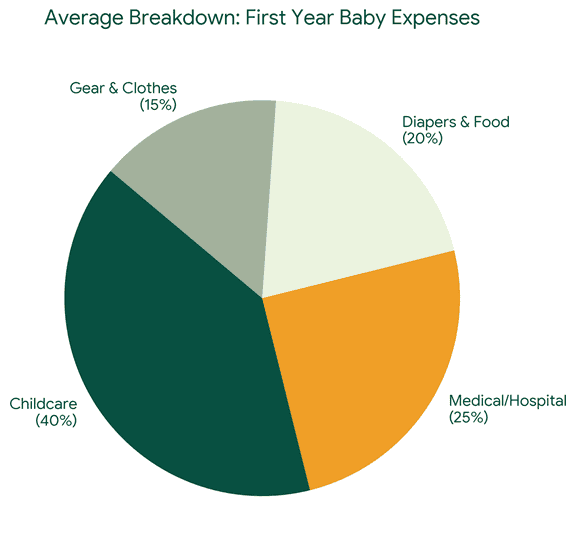
A percentage breakdown of the typical expenses you will face in your baby’s first year.
Now that we understand the categories and the gravity of the expenses, it is time to build your actual plan.
Here are the seven proven steps I used as a father to gain control over our family finances and build our financial roadmap before our baby arrived.
1. Start Tracking Immediately to Build Your Cost of Having a Baby Budget
Before you can add infant expenses to your life, you need to know exactly where your money is currently going every single month to accurately calculate your cost of having a baby budget.
If you are unsure how to start this process, check out my comprehensive guide on How to Build a Monthly Budget That Actually Works. It is the foundation for any successful family financial plan.
2. Create a Dedicated Sinking Fund for Baby Expenses
A sinking fund is a separate savings account created specifically to fund the upcoming expenses listed in your newborn spreadsheet.
By treating your cost of having a baby budget like a non-negotiable monthly bill, you spread the financial impact over nine months instead of taking a massive hit all at once as a new dad.
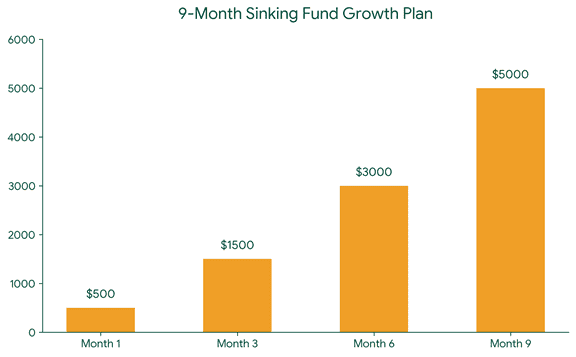
Example of a 9-month savings timeline to prepare for baby expenses.
3. Factor Childcare Early Into Your Estimates
Childcare is almost always the single largest expense for new parents, easily dominating your entire cost of having a baby budget.
Whether you plan to use a daycare facility or hire a nanny, start researching costs in your area immediately to update your projections.
You can use the resources at BabyCenter to estimate average childcare rates and finalize your monthly limits.
4. Audit Parental Leave to Protect Your Finances
Another massive factor in your pre-baby planning is calculating the temporary income replacement for both you and your partner.
If you are in the US, paid leave is notoriously sparse. You must calculate exactly how many weeks of unpaid leave your family will take, and save the equivalent of those missing paychecks in your cost of having a baby budget.
5. Buy Second-Hand Gear Strategically to Lower Expenses
You do not need to buy everything brand new. In fact, doing so will quickly destroy your carefully planned cost of having a baby budget.
Items like clothes, strollers, and bassinets are perfectly safe to buy gently used, which keeps your overall spending extremely lean.
However, safety experts universally agree you should always buy your car seat brand new, even if it raises your overall costs slightly.
6. Embrace the No-Spend Challenge to Boost Your Savings
One of the best ways a father can rapidly boost family savings is to temporarily cut all non-essential spending from the household budget.
Try doing a strict no-spend month during the second trimester. It is a fantastic way to stress-test your cost of having a baby budget.
Read my article on the No-Spend Challenge to see exactly how I survived mine and significantly grew our baby fund.
7. Automate Savings for a Stress-Free Experience
Willpower is a finite resource, especially when you are dealing with the exhaustion of preparing for a new child. Automation saves your sanity.
Set up automatic transfers from your checking account directly to the savings account dedicated to your upcoming hospital and gear expenses.
Automating your contributions guarantees you hit your savings goals without having to make daily decisions as an overwhelmed expectant dad.
Essential Tools to Manage Your New Family Finances
You do not have to manage the numbers in your head. In fact, trying to do so will only increase your anxiety as a parent.
I highly recommend using a structured spreadsheet to keep your growing family on track and your cash flow strictly organized.
You can grab my free Family Budget Template to get a massive head start on your planning.
How an Emergency Fund Supports Your Newborn Planning
Beyond your dedicated baby fund, you need a robust emergency fund. Medical emergencies can easily shatter a fragile cost of having a baby budget.
Aim to save for 3-6 months of essential living expenses alongside your baby-specific savings. Learn more in my guide: Emergency Fund: How Much You Really Need.
Frequently Asked Questions About Budgeting for a Baby
How much should I realistically save?
While global averages suggest $10,000 to $15,000 for the first year, your personal goal should be saving enough to cover out-of-pocket medical maximums, unpaid leave deficits, and essential gear. Building a sinking fund of $5,000 to $8,000 is a great baseline for your newborn fund.
Should I include childcare?
Absolutely. Many daycares require deposits upfront. Knowing your future childcare costs allows you to adjust your current living expenses to ensure your monthly projection is realistic for the upcoming bills.
What is the biggest waste of money?
Designer baby clothes and high-end shoes for infants will quickly ruin a well-planned budget. Babies grow incredibly fast. Stick to basic, affordable essentials to protect your savings.
Final Thoughts
Stepping into the role of a father is a massive life transition, but financial stress does not have to ruin the beautiful experience if you have a strong financial plan.
By proactively managing your money, you buy yourself the ultimate luxury as a dad: peace of mind.
You get to focus entirely on bonding with your newborn instead of panicking about the numbers inside your spreadsheet. Start early, stay incredibly consistent, and remember that mastering your cost of having a baby budget today is a profound gift to your future family.