
If you have ever wondered how to talk to kids about money without turning it into a tense conversation, you are not alone.
When my daughter was seven, she once posed me a question about buying the bigger box of cereal rather than the smaller one during a grocery run. I was frozen in silence for a minute before I told her something about budgets and moved on from the topic. It is only after the day ended that I understood that I had never really spoken about money with my kids in a proper manner. Just like how my own parents did not speak about it, I was avoiding it by hoping that somehow the topic would resolve on its own.
However, what helped me realize the importance of talking about money is not any formal conversation that took place between us. Rather, what helped was that money discussions do not need to take place under formal settings, nor do they need to be awkward and intimidating. These are conversations that can happen at random times, be it in the line while checking out items or at dinner or even during coin counts. When I began to open up about money in our family, the questions were easy to address, arguments ceased, and my children asked more intelligent questions.
Why Parents Avoid Talking to Kids About Money
Most parents want to talk to kids about money in a good way, yet many still avoid it. A survey by Fidelity found that more than half of adults say their own parents never talked about money with them growing up. That silence often gets passed down without anyone meaning for it to happen.
The truth is that avoiding the topic does not protect children. It simply leaves them to guess, and guessing often leads to more stress later in life. Learning to talk to kids about money early removes a lot of that guesswork.
When Is the Right Time to Talk to Kids About Money
There is no perfect age to start. Children begin noticing money the moment they see you pay for something at a store. The Consumer Financial Protection Bureau has a helpful guide called Money as You Grow that breaks down age appropriate money milestones for children at every stage.
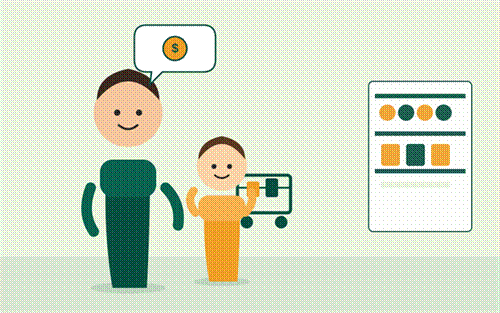
A simple grocery trip is often the easiest place to talk to kids about money.
7 Simple Ways to Talk to Kids About Money Without Stress
Once you decide to talk to kids about money, the next step is choosing how to do it without making everyone uncomfortable. These seven steps have worked well in our own home.
1. Use Everyday Moments Instead of Big Talks
You do not need a formal sit down to talk to kids about money. A grocery run, a restaurant bill, or a trip to fill up the car are all natural moments to explain a small money decision.
2. Keep Your Tone Calm and Curious
Children pick up on tone faster than words. If you talk to kids about money while sounding worried or frustrated, they will absorb that feeling more than the lesson itself. Stay relaxed even if the topic feels heavy to you.

Everyday moments like counting coins make it easier to talk to kids about money.
3. Let Them Ask Questions Freely
Do not shut down a money question just because it feels awkward. When you talk to kids about money and welcome their questions, you teach them that curiosity is safe, not something to hide.
4. Use Real Examples From Your Own Life
Sharing a real decision you made, such as choosing a cheaper option to save for something bigger, makes the lesson stick. Real stories are far more memorable than general advice.
5. Bring In Tools Like Allowance and Money Apps
Giving your child an allowance is one of the simplest ways to talk to kids about money through action instead of words. Our kids allowance guide covers how much to give and when to start. If you prefer something more visual, our review of the best money apps for kids in 2026 lists tools that make saving and spending feel like a game rather than a chore.
6. Talk About Saving for Real Goals
Children understand saving better when it is tied to something they actually want. Whether it is a toy, a trip, or their future education, connecting money to a real goal makes the lesson concrete. If college is part of your family plan, our article on how to start a college fund for your child is a good next read.
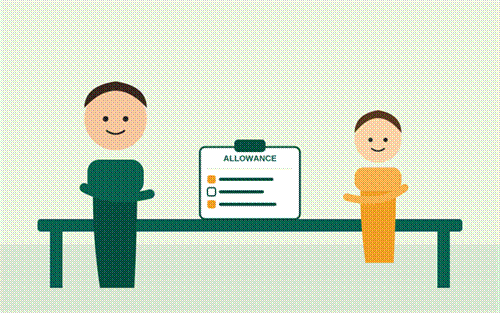
Tools like allowance charts give you a natural way to talk to kids about money.
7. Make It an Ongoing Conversation Not a One Time Talk
The biggest mistake is treating this like a single event. You should talk to kids about money regularly, in small doses, as they grow. Our full guide on teaching kids about money breaks this down by age if you want a longer roadmap.
Mistakes to Avoid When You Talk to Kids About Money
Even with good intentions, certain habits can make money talks harder than they need to be.
Mistake 1. Turning it into a lecture instead of a conversation.
Mistake 2. Sharing too much adult stress, like debt worries, before a child is ready to process it.
Mistake 3. Waiting for the right moment that never actually comes.
Mistake 4. Dismissing a child question because it feels too personal.
Organizations like Sesame Workshop and the Kids Mental Health Foundation both offer guidance on how to talk to kids about money and financial stress in a way that protects their emotional wellbeing rather than adding to it.
How This Conversation Grows With Your Child
The way you talk to kids about money should change as they grow older. A five year old only needs to understand that money is earned and spent. A teenager can start handling a small budget or comparing prices before a purchase.
The FDIC has noted that starting these conversations early pays off well into adulthood, since financial habits formed in childhood tend to stick. If you want to see how this looks in practice, our article on how to raise financially independent children from toddler to teen walks through the full progression.

As your child grows, the way you talk to kids about money should grow too.
Final Thoughts on How to Talk to Kids About Money
You do not need a script or a perfect moment to talk to kids about money. Start small, stay calm, and let the conversation grow naturally over time. My own family did not get it right on the first try, and yours does not have to either. What matters is that you start.