If you have a regular salary and you have been wondering how to start investing, you are already in a better position than you think. The truth is that you do not need a lot of money to begin. You do not need to understand the stock market perfectly. You just need a plan that fits the way you already earn and spend. If you want to know how to start investing without confusion, the best starting point is your monthly salary.
I will start investing by accepting that I do not need complete knowledge before I begin. As a salaried person, my biggest strength is that I receive income regularly, so I can create a simple process and repeat it every month. I will not wait until I earn a huge amount because investing works best when money has time to grow. Even a small amount will help me build the habit.
This article will show you how to start investing with a salary, how much you should invest each month, where the safest places to start are, and how to keep investing without stress or second-guessing yourself.
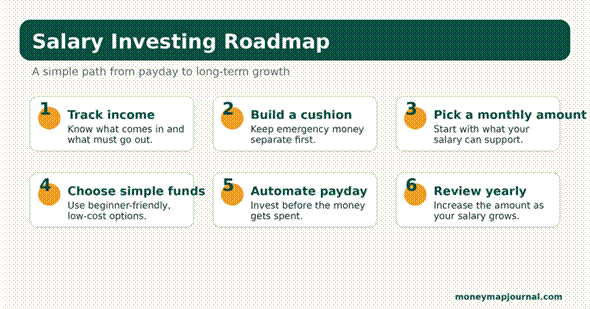
Figure 1. A salary-based investing plan helps beginners move from budgeting to investing in a clear monthly routine.
Why Learning How to Start Investing Feels Overwhelming at First
Most people who earn a regular salary do not start investing because they feel they are not ready. They think they need more money, more knowledge, or more time. Learning how to start investing can feel difficult at first because every platform, expert, and article seems to use different language. That feeling is very common and it makes complete sense.
The financial world is full of complicated terms and fast-moving information. It can feel like a place built for experts rather than regular people. But beginner investing has become much simpler in recent years. You no longer need a stockbroker or a large lump sum to begin. You just need a plan and the willingness to start. That is why learning how to start investing should begin with one clear step, not every investment option at once.beginner investing
Remember: The fear of losing money is one of the most common reasons people delay investing. But inflation means money sitting in a savings account is already losing value over time. Starting small and staying consistent is better than waiting for the perfect moment.
What You Should Do Before You Learn How to Start Investing
Before investing, I will check the state of my basic finances. This means checking my monthly expenses, reducing unnecessary spending, and building an emergency fund. This step matters because investing can feel stressful when I use money that I may need the next week. Once I know my bills are covered, I can invest with peace of mind.
According to the U.S. Securities and Exchange Commission, a good first step is to review your finances, reduce unnecessary expenses, and build a financial cushion before putting money into any investment.
Here is what that looks like in practice:
- Track your monthly expenses and cut what you do not need
- Make sure all your bills and debt payments are covered
- Build an emergency fund before you invest
- Know exactly how much of your salary is left after essential costs
If you do not yet have a clear picture of your monthly income and spending, the first thing to do is build a monthly budget. Before you learn how to start investing, you need to know where your salary goes each month. A budget gives you clarity on exactly how much you can invest every month without putting your bills at risk.
Should You Save First When Learning How to Start Investing?
This is one of the most common questions for salaried beginners and the answer is both, but in the right order. A smart answer to how to start investing begins with protecting yourself from emergencies first.
Your first priority is to build an emergency fund. The Consumer Financial Protection Bureau describes it as money set aside specifically for unplanned financial emergencies, completely separate from money you plan to invest.
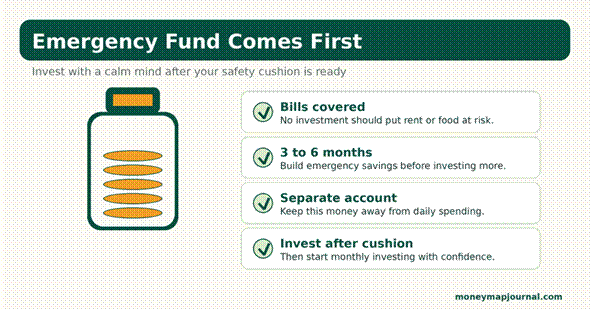
Figure 2. Building an emergency fund first gives a salaried investor more confidence before investing.
Use the emergency fund calculator on Money Map Journal to find out how much you need based on your monthly expenses and goals. It is a useful tool when you are learning how to start investing because it separates emergency savings from long-term investments. Once your emergency fund is in place, you are ready to invest with peace of mind because you know you are not using money you might need next week.
Rule of thumb: Save 3 to 6 months of living expenses in your emergency fund before you start investing. This protects you from being forced to sell your investments at the wrong time if something unexpected happens.
If you are still in a position where money runs out before your next paycheck, read this guide first on how to stop living paycheck to paycheck. Investing works best when your basic financial foundation is steady.
How Much of Your Salary Should You Invest When Learning How to Start Investing?
After that, I will choose a simple monthly investment amount from my salary. It does not need to be a perfect calculation. The important thing is to make investing regular after payday, just like rent, transport, and other bills. This approach helps me avoid overthinking and makes investing automatic.
A widely used rule is the 50/30/20 framework, where 50% of your income covers needs, 30% covers wants, and 20% goes toward savings and investments combined. You can use the 50/30/20 budget calculator to apply this to your exact salary and see what your monthly investment number could look like. This helps you see how to start investing from the money you already earn, rather than waiting for a higher salary.
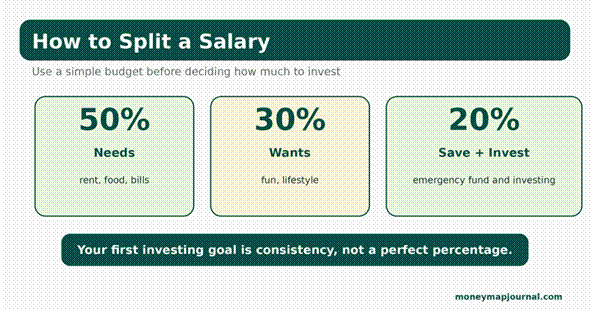
Figure 3. The 50/30/20 framework helps salaried beginners separate needs, wants, and savings or investments.
But here is what matters most: the exact percentage is less important than the habit. If you can only invest 5% right now, that is completely fine. What matters is that you start, make it automatic, and increase the amount as your income grows.
A Simple Monthly Investment Rule
- If your salary is tight: start with 5% of take-home pay each month
- If you are comfortable: aim for 10% to 15%
- If you have extra room: go up to 20% or more
Treat your monthly investment like a fixed bill. Set it to leave your account on payday and it removes the temptation to spend it first. This is one of the simplest ways to practice how to start investing without turning it into a daily decision.
How to Start Investing in Beginner-Friendly Options
According to Investor.gov, the main investment products available to beginners include stocks, bonds, mutual funds, and exchange-traded funds (ETFs). For most salaried beginners, the simplest and most practical starting point is one of the following:
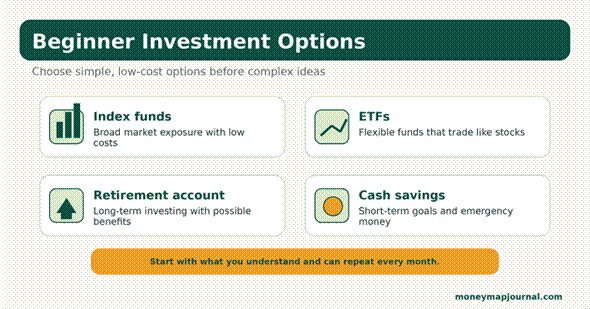
Figure 4. Simple beginner investment options can help salaried employees avoid complex choices at the start.
Index Funds
An index fund is a collection of stocks that tracks a market index such as the S&P 500. Instead of picking individual companies, you invest in all of them at once. This spreads your risk and gives you broad exposure to the market with very low fees. Most financial experts recommend index funds as the starting point for new investors.
ETFs (Exchange-Traded Funds)
ETFs work similarly to index funds but they trade on the stock exchange like individual stocks. They are flexible, low-cost, and easy to buy through most beginner investing platforms. Many salaried investors use ETFs as the foundation of their monthly investment plan.
Retirement Accounts
If your employer offers a retirement savings plan such as a 401(k) in the US or a pension scheme elsewhere, this is often the best first place to invest. Many employers match a percentage of what you contribute, which is essentially free money added to your investment.
Important: The goal at this stage is not to find the investment with the highest possible return. The goal is to find something simple, low-cost, and consistent that you can keep doing every single month without stress.
Best Investments When You Learn How to Start Investing
When choosing where to put your money, the best investment for a salaried person is one that matches three things: your risk comfort level, your time horizon, and your ability to stay consistent.
Here is a simple overview of what works well for beginners with a salary:
- Index funds: low cost, diversified, and easy to automate monthly
- ETFs: flexible and available on most beginner platforms
- Retirement accounts: tax advantages and sometimes employer matching
- High-yield savings accounts: for money you may need within one to two years
Finally, to avoid overcomplicating the process, I will choose simple investments first. These can include beginner-friendly stock market options such as index funds, ETFs, or retirement accounts. I will avoid complex investments, quick-profit schemes, and daily trading. The goal is to understand what I invest in and stay consistent.
How to Start Investing Monthly Without Stress
The most powerful thing a salaried person can do is invest the same amount every month without overthinking it. This approach removes the stress of trying to time the market. If you want to know how to start investing without stress, automation is one of the most useful habits to build. You can read more about how this works in the compound interest explained guide on Money Map Journal, which includes real examples of how monthly contributions grow over time.compound interest explained
Use the compound interest calculator to see what your monthly investment could grow into over 10, 20, or 30 years. The numbers are often surprising. This is why how to start investing early matters more than waiting for the perfect amount. A small monthly amount invested consistently from your mid-twenties can grow into a significant sum by retirement, simply because of the time it has to grow.
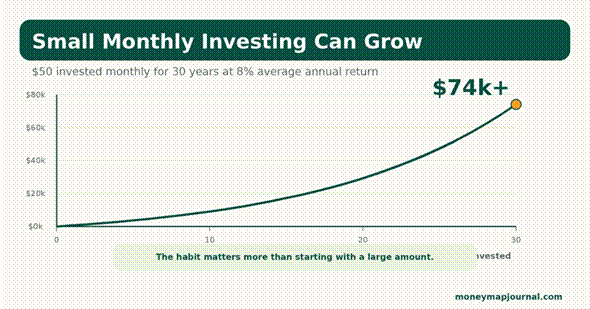
Figure 5. A small monthly investment can grow over time when it stays invested consistently.
According to Vanguard, investing consistently over a long period is one of the most reliable ways to build wealth. What matters most is not the size of each contribution but the consistency of making it.
How to Start Investing With a Small Salary
One of the biggest reasons people delay investing is the belief that their salary is too small to make a difference. This is a very understandable feeling but it is not accurate.
The math of compound growth works at every level. Even $20 or $30 per month invested consistently from a young age will grow into something meaningful over decades. When you ask how to start investing with little money, the answer is to begin with an amount you can repeat. The key is not the size of the amount. The key is starting and staying consistent.
Here is how to make investing work on a small salary:
- Start with whatever you can afford, even if it is $10 or $20 per month
- Automate the transfer so it happens before you have a chance to spend it
- Increase the amount by even a small percentage each time your salary goes up
- Look for ways to negotiate your salary or build multiple income streams so you have more to invest over time
Perspective check: $50 per month invested for 30 years at an average 8% annual return grows to over $74,000. The amount you start with matters far less than how early you start and how long you stay consistent.
Mistakes to Avoid When Learning How to Start Investing
The U.S. Securities and Exchange Commission highlights that many beginner investors make costly mistakes simply because they do not understand the basics before they start. Many people search for how to start investing and then rush into quick returns before building a steady plan. Here are the most common ones to watch for:U.S. Securities and Exchange Commission
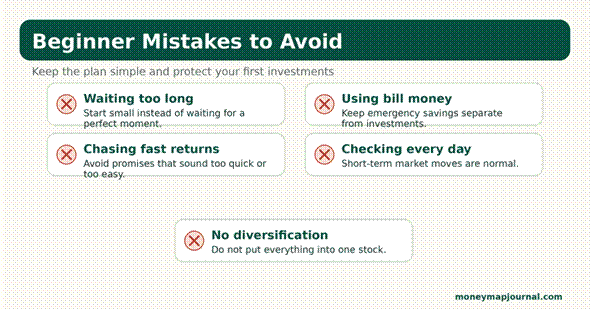
Figure 6. Avoiding common investing mistakes can keep the beginner plan simple and sustainable.
- Waiting until you have a large amount before starting: time in the market matters more than the size of your first investment
- Investing money you still need for bills: always keep your emergency fund separate and intact
- Chasing quick returns: if something promises to double your money in weeks, it is a risk, not an investment
- Checking your investment every day: short-term price movements are normal and do not require action
- Not diversifying: putting all your money into one stock or one sector increases your risk significantly
- Quitting during a market dip: markets go up and down and long-term investors who stay the course typically recover and grow
The most important thing to remember is that investing is a long-term process. The people who build real wealth through investing are not the ones who make bold moves. They are the ones who start early, invest consistently, and stay patient.
Frequently Asked Questions
How to start investing with a salary?
The best way to start is to make investing part of your salary routine. Build an emergency fund first, choose a small monthly amount, automate it after payday, and use simple investments such as index funds, ETFs, or a retirement account. This keeps the process clear and helps you learn how to start investing without feeling pressured to make perfect decisions.
What is the best investment for a salaried person?
Index funds and ETFs are widely considered the best starting point for salaried beginners. They are low-cost, diversified, and easy to automate. If your employer offers a retirement plan with matching contributions, that should be your first priority because the employer match is essentially free money added to your investment.
How much should I invest per month from my salary?
A common starting point is 10% to 15% of your take-home pay. If that feels like too much right now, start with 5% and increase it gradually. The most important thing is consistency. Use the 50/30/20 budget calculator to find a number that fits your specific situation.
What percentage of my income should I invest?
There is no single correct answer because it depends on your income, expenses, and goals. The most widely recommended range is between 10% and 20% of your take-home pay. If you have high-interest debt, it is often better to pay that down first before investing beyond your employer match.
Should I invest weekly or monthly?
For most salaried people, monthly investing works best because it aligns with when your salary arrives. You invest once per month, on payday, automatically. This keeps things simple and removes the need to make decisions every week.
How do I start investing if I am scared of losing money?
Fear of losing money is completely normal and it stops many people from ever starting. If fear is holding you back, the safest answer to how to start investing is to start small and avoid money you need for bills. The most practical way to reduce that fear is to start with a small amount you are genuinely comfortable with, choose low-risk options like index funds, and remind yourself that you are investing for the long term. Short-term price drops are normal and do not mean you have lost your money permanently.
What are the safest investments for beginners?
The safest options for beginner investors with a salary are index funds, ETFs, and retirement accounts. These options are diversified, low-cost, and designed for long-term growth rather than speculation. They are not risk-free since all investments carry some level of risk, but they are far more stable than picking individual stocks or trading frequently.
How do I start investing with little money?
Start with whatever amount you can afford, even if it is $10 or $20 per month. Open an account with a beginner-friendly platform that allows fractional investing, meaning you can buy a small piece of a fund without needing to afford a full share. Automate the monthly transfer and increase the amount as your income grows.
Final Thoughts
Learning how to start investing with a salary does not require a financial degree or a large lump sum. It requires one decision: to start. The moment you make your first investment, no matter how small, you have crossed the most important line. Everything after that is about staying consistent and letting time do the heavy lifting.
Your salary is your biggest strength as a beginner investor. It gives you a reliable, repeatable source of money to invest month after month. Once you understand how to start investing, the next step is to stay consistent. Build your emergency fund first, set a monthly investment amount you can actually stick to, choose simple and low-cost options, and stay the course even when markets feel uncertain. That is how salaried people build lasting wealth. If you are ready to go deeper, start with the full guide on investing for beginners and use the free personal finance calculators to build a plan that fits your exact numbers.