Investing on a salary can feel intimidating when you’re staring down a paycheck, a growing list of bills, and dozens of conflicting opinions about where your money should go. The good news is that you don’t need a finance degree, a windfall, or perfect timing to start. You just need a system that runs quietly in the background of your regular income — and that’s exactly what this guide will help you build.
If you’ve been putting off investing because it feels too complicated, this is your starting point.
My Own Struggle With Investing on a Salary
I will never forget the exact moment when I saw my salary on my banking app and simply could not do anything. At least I should have been investing my salary, but what amount? Was it 10%, half, or whatever else? For several weeks I tried to find on Google formulas about what amount I should invest according to my salary. But there was no magic formula for solving this issue. The only thing that I felt after such attempts was the stress. Every day and every week I was not investing my salary, I felt I was losing a lot compared to other people who were already dealing with it.
For a certain period of time, I was trying to chase something inappropriate. I wanted to know where to invest money to get daily income, how to make a profit quickly and easily. I believed that it was enough to find a proper opportunity, which would provide me with monthly payment, not making me wait for it for many years. Now, looking back, I see how many fears were hidden in this idea of mine. Fear of being late, fear of missing some opportunity, fear of failing. I followed a couple of ideas, but none of them brought me any result and left me even more disappointed.
But what helped me finally was the fact that I gave up searching for the safest way to invest money as a way out. Instead of finding a solution, I decided to change my attitude. I stopped looking for a miracle and tried to invest a certain amount of money regularly, not waiting until I found the most appropriate solution and not caring whether this sum was really significant or not. And now, when I see my savings growing slowly, I feel that I am getting the result which I have never expected before.
If any of that sounds familiar, keep reading — because the system that eventually worked for me is simpler than most of what you’ll find online.
Why Investing on a Salary Feels So Overwhelming
Most people don’t struggle with investing because it’s mathematically hard. They struggle because there are too many decisions to make at once: which account, which platform, which fund, how much, how often. When every choice feels like it could be “wrong,” the easiest option becomes doing nothing at all.
A steady salary is actually one of the best tools you can have for investing, because it gives you a predictable, repeatable amount of money to work with every single month. The goal isn’t to make one perfect decision — it’s to build one simple habit you can repeat for years.
How Much of Your Salary Should You Invest?
This is one of the most common questions people search for, and understandably so — there’s no single number that fits everyone. As a general starting point, many financial guides suggest investing somewhere between 10% and 20% of your take-home pay, adjusted based on your debt load, cost of living, and existing emergency savings.
If 10% feels out of reach right now, that’s fine. What matters far more than the exact percentage is starting with something and increasing it over time. Someone investing 3% of their salary consistently for years will typically end up further ahead than someone waiting to “afford” the ideal 20% and never starting at all.
A simple way to decide your number:
- If you have high-interest debt, prioritize paying that down first, while still contributing enough to capture any employer match.
- If you have a small emergency fund, split your extra income between building that cushion and investing.
- If your basics and emergency fund are covered, aim to gradually work up to 15–20% of your salary.
Step 1: Start With What You Already Have
Before opening any new accounts, check what’s already available to you through your employer. Many companies offer a retirement plan with a partial or full match on contributions — this is essentially free money added to whatever you put in.
If your employer offers a match, contributing at least enough to get the full match should usually come before any other type of investing. Turning down a match is turning down guaranteed returns that even the best investors can’t promise you elsewhere.
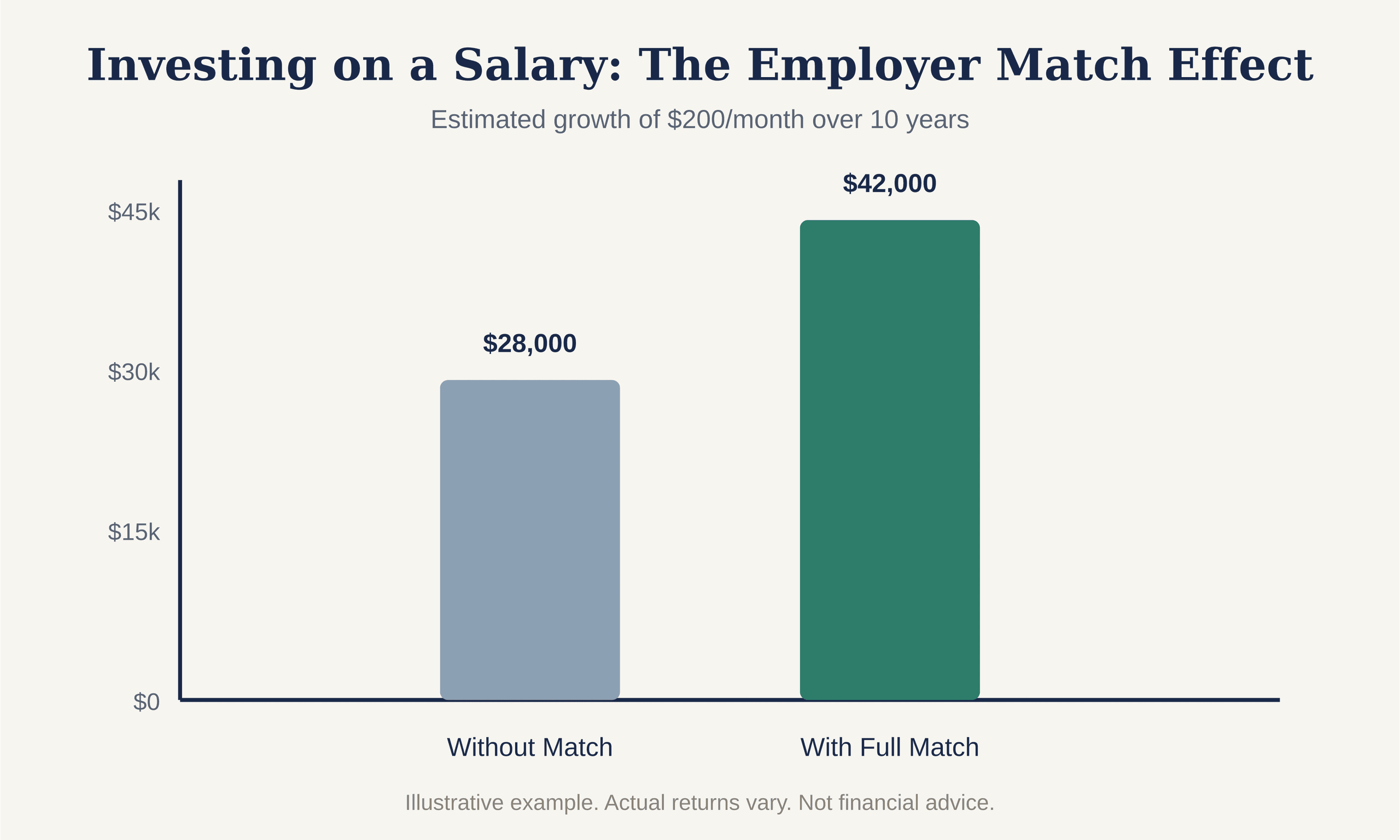
Figure 1: The difference an employer match can make when investing on a salary consistently over time.
Step 2: Automate Your Investing Before You Feel It
The most reliable way to keep investing on a salary is to remove yourself from the decision entirely. Set up an automatic transfer that moves money from your checking account into your investment or retirement account on the same day your paycheck lands.
This works because it treats investing like a bill you pay yourself, rather than a leftover you hope to have at the end of the month. Even a modest amount — the equivalent of a few coffees a week — adds up meaningfully when it’s consistent.
If you want a fuller breakdown of getting started with your very first contribution, our guide on investing your first $1,000 walks through that initial step in detail.
Step 3: Keep Your Investments Boring on Purpose
When you’re new to investing on a salary, the safest and most time-tested approach is usually the least exciting one: low-cost, diversified funds that track the broader market rather than individual stocks you’d need to research constantly.
This is why so many beginners are pointed toward index funds — they spread your money across hundreds or thousands of companies at once, which reduces the impact of any single company performing badly. We cover exactly how these work in our guide to what an index fund is, and Investopedia has a solid technical breakdown of how index funds work if you want to go deeper.
Pair this with contributing the same amount on a set schedule — known as dollar-cost averaging — and you remove the pressure of trying to “time” the market. We cover this in depth in What Is Dollar-Cost Averaging?, or see NerdWallet’s explainer on how dollar-cost averaging works in practice.
Step 4: Choose the Right Type of Account
Where you invest matters almost as much as what you invest in. Depending on where you live, you may have access to tax-advantaged accounts — such as employer retirement plans, individual retirement accounts, ISAs, RRSPs, or superannuation — that let your money grow with less drag from taxes compared to a standard brokerage account.
If you’re deciding between a tax-advantaged account and a regular brokerage account, our comparison of Roth IRA vs. brokerage accounts breaks down when each one makes sense. And if you haven’t opened an account yet, our step-by-step guide to opening a brokerage account walks you through the practical setup from start to finish.
Step 5: Increase Your Contributions as Your Salary Grows
One of the easiest ways to keep investing on a salary without it ever feeling like a sacrifice is to increase your contribution every time your income increases. When you get a raise, redirect a portion of it — say half — into your investment account before your spending habits catch up to your new pay.
This “pay yourself first, then increase it” approach lets your investments grow in step with your career, without requiring you to make a dramatic lifestyle change at any single point.
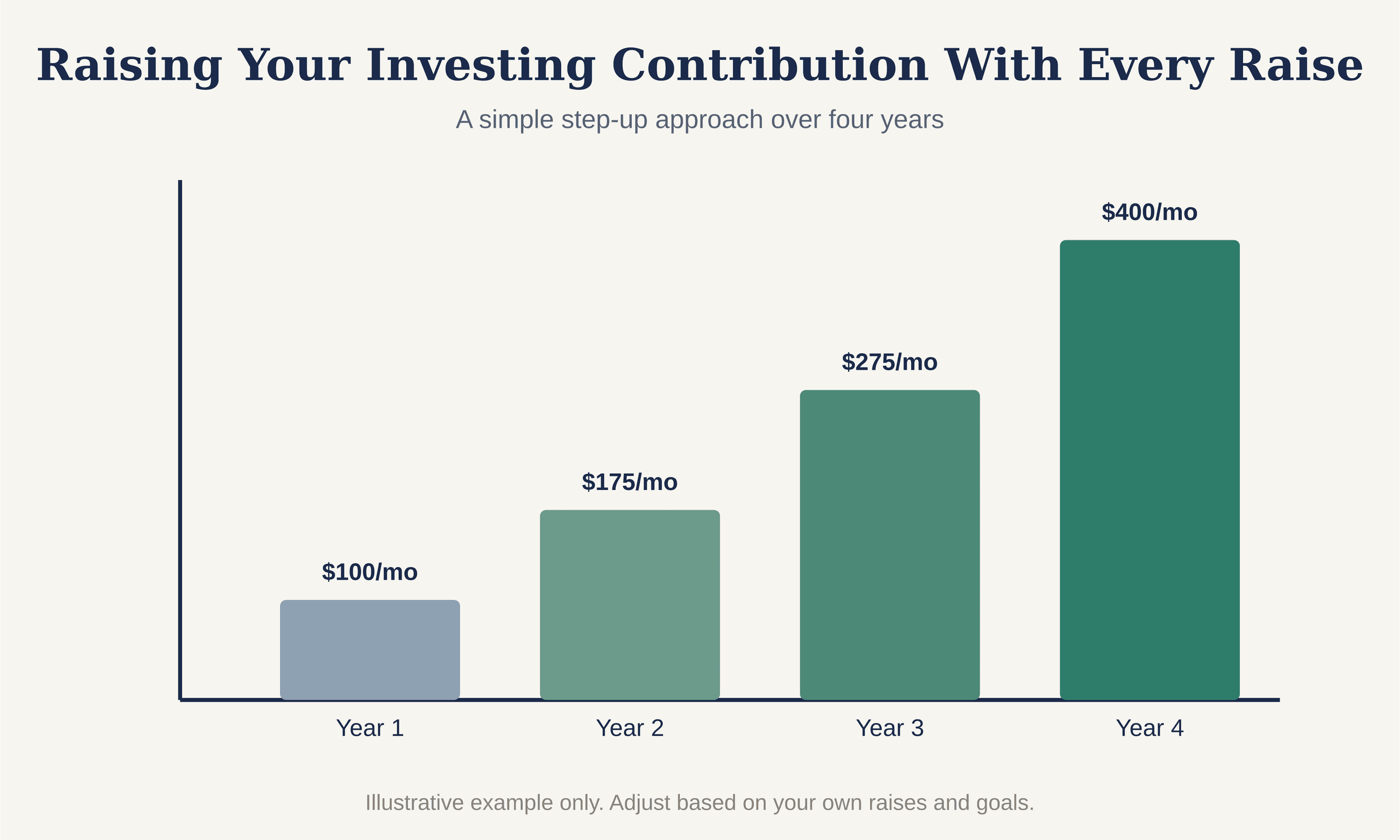
Figure 2: Gradually raising your contribution each year as your salary grows, rather than trying to jump to a large percentage all at once.
What Is the Safest Way to Invest Money?
There’s no investment that comes with zero risk while also offering meaningful growth — anything promising both should be treated with suspicion. That said, “safer” investing on a salary generally means:
- Choosing broad, diversified funds instead of individual stocks or speculative assets
- Avoiding money you can’t afford to have tied up for at least several years
- Spreading contributions out over time instead of investing a lump sum right before a major market swing
- Keeping your emergency fund separate from your long-term investments entirely
Safety in investing isn’t about finding a product with no risk — it’s about managing how much risk you’re exposed to at any given time, and giving your money enough time to recover from normal market ups and downs.
Can You Really Get Monthly Income From Investments?
Searches for monthly income from investments are extremely common, and the honest answer is: yes, eventually, but usually not right away. Dividend-paying stocks, certain bonds, and real estate investment trusts (REITs) can generate regular income, but the amount you receive is directly tied to how much you’ve already invested.
For example, generating a meaningful monthly income stream typically requires a substantial invested balance built up over years, not weeks. If you’re just getting started with investing on a salary, your early contributions are doing a different job: building the base that could eventually produce that income, rather than producing it immediately. Chasing “instant” monthly income too early in your investing journey is one of the most common ways beginners end up in high-risk, poorly understood products.
Why “Double Your Money in 5 Years” Promises Don’t Work
If you’ve spent any time researching investing online, you’ve probably come across bold claims: turning $10,000 into $100,000 in a few years, doubling your money fast, earning $1,000 in an hour, or vague viral concepts like a “7-7-7 rule” or “7 pillars of wealth” that don’t actually trace back to any consistent, verifiable source. You may have also seen ads suggesting an AI chatbot can make you money on autopilot, or offers to get paid simply for watching videos.
It’s worth being direct about this: legitimate investing on a salary is not designed to double your money in a handful of years, and anything promising that kind of return, consistently, without matching risk, deserves real skepticism. A useful, well-established tool for setting realistic expectations is the Rule of 72, which estimates how long an investment takes to double based on its rate of return — and at typical long-term market returns, that’s closer to a decade than a couple of years.
None of this means growth isn’t possible. It means sustainable growth tends to look boring in the moment — small, regular contributions, invested in diversified funds, given time to compound — rather than exciting in the moment and disappointing later.
Common Mistakes to Avoid
A few habits tend to derail people early on:
- Waiting for a “better time.” There’s rarely a perfect month to start; consistency matters more than timing.
- Checking your balance too often. Frequent checking during normal market dips can lead to emotional decisions that hurt long-term returns.
- Investing money you’ll need soon. Short-term savings shouldn’t sit in the same place as long-term investments, since markets can dip right when you need the cash. If you haven’t built that cushion yet, our guide on how much emergency fund you really need is a good place to start.
- Skipping the employer match. As covered above, this is usually the single costliest mistake for salaried employees.
- Chasing quick returns. As outlined above, promises of fast, guaranteed growth are one of the most common ways beginners lose money rather than build it.
Frequently Asked Questions
What are the best investments for beginners investing on a salary?
For most beginners, diversified, low-cost index funds are the easiest entry point. They don’t require picking individual companies, they spread risk across many businesses at once, and they’re widely available through employer retirement plans and standard brokerage accounts alike.
Can I start investing on a salary if I still have debt?
It depends on the type of debt. High-interest debt, such as most credit card balances, typically costs more than investing earns, so it usually makes sense to prioritize paying that down — while still contributing enough to capture any employer match. Lower-interest debt, like some student loans, can often be paid down alongside a modest, steady investing habit.
How long does it take to see real results when investing on a salary?
Most people don’t feel a noticeable difference in the first few months, and that’s normal. The visible momentum tends to show up after one to two years of consistent contributions, once compounding has had time to work — which is exactly why starting early, even with a small amount, tends to matter more than trying to invest a large amount later.
The Bottom Line
Investing on a salary doesn’t require a lump sum, a lucky stock pick, or a finance background. It requires a repeatable system: figure out a starting percentage, capture any employer match, automate your contributions, keep your fund choices simple, pick the right account type, and raise your contribution as your income grows.
Build that habit once, and it will keep compounding quietly in the background for years — long after the initial overwhelm has faded. That, more than any formula or shortcut, is what actually changes your financial position over time.